








The Médoc Peninsula is a highly strategic location. This is borne out by the testimonies of the various populations who have occupied it throughout our history. The Médoc Peninsula borders the Landes de Gascogne region. It has also been its gateway since the beginning of mankind.
THE MEDOC PENINSULA, RICH IN HISTORY AND AGE-OLD CULTURE
Ancient elephant bones have been found at Le Gurp, the beach next to Euronat, and at L’Amélie, south of Soulac. Numerous flints found all along the Médoc coast attest to the presence of man as early as the Neolithic period in our Médoc Peninsula.
Many of the copper objects found in our region, like the flints, are on display at the Soulac Museum of Archaeology. During the Bronze Age, the Médoc was a prosperous and populous region. Inhabitants made their living from farming, fishing and salt production.
The Gallo-Roman era
At the same time, the Médules arrived, a Basque people who gave their name to our region: Méduli (Médoc). Our ancestors spoke Basque until the arrival of the Romans! But first came the Bituriges (Gauls), leaving the estuarine shore to the Médules. The Soulac museum has a wealth of evidence from this period, including the Soulac wild boar. This period was already rich in trade, as demonstrated by the numerous types of coins that have also been found. The Gauls also provided the Médoc with an extensive network of roads, well before Roman times. The Romans introduced wine-growing (around 60 AD), which has never ceased since, with the renown we know today. Even if it was the Gauls who invented the barrel!
From Euronat, visit the Gallo-Roman remains at Jau and St Germain d’Esteuil.
Later, the first major road between Burdigala (Bordeaux) and the northern Médoc was also built: ” la lébade “; a road that can still be seen at Avensan, and on which we drive daily between Vensac and Grayan, where it is called the “chemin de la Reyne”. Le chemin de la Reyne, because later, Eleanor of Aquitaine returned to her homeland via this very road.
The barbarian invasions
The Médoc suffered terribly from barbarian invasions throughout the first millennium. The Saxons and Visigoths razed many villages to the ground. And finally the Vikings, who destroyed everything in their path, from the entrance to the estuary to Toulouse. The Vikings virtually emptied the Médoc of its inhabitants. Forts and defensive batteries were nevertheless built all along the Gironde to protect the city of Bordeaux.
THE MIDDLE AGE

Because of its geological design (sand, marshes), the Médoc Peninsula is a territory with shifting borders, so much so that in the early Middle Ages, Soulac was on the estuarine shore. The rocky plateau of Cordouan was attached to the mainland, but at the time there was no mention of the famous lighthouse. Nevertheless, by the 11th century, a monastery was already established there, guiding sailors through the night by lighting fires. Lesparre, meanwhile, was a river port.
Soulac and Grayan, stopovers for pilgrims
St Jacques pilgrims arriving from northern Europe and western France took the “coastal route” or “English route” to Portugal. They arrived in Soulac by boat and continued their pilgrimage on foot along the coastal road. The Notre Dame de la fin des terres basilica, the Grayan hospital (no longer in existence) and its chapel are part of this heritage. The Tour de l’Honneur in Lesparre, the last vestige of the Château of the seigneury of the same name, also remains from the Middle Ages.
Lac d’Hourtin
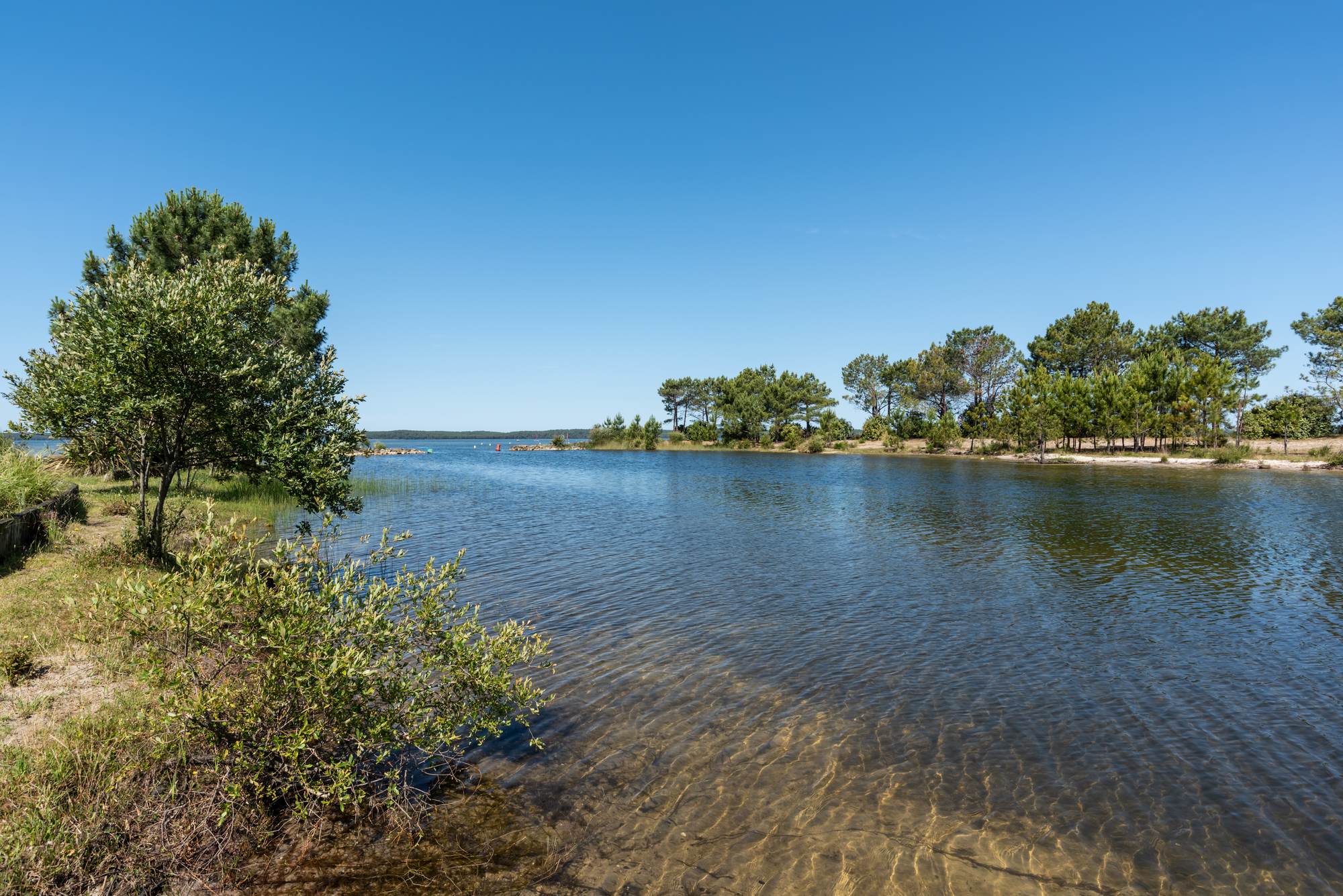
The dunes eventually block the flow of rivers from the Landes to form Lac d’Hourtin, France’s largest freshwater lake, just 30 kms from Euronat. Here you’ll find sailing clubs and many other water sports activities. You can also walk or cycle around the lake and through the surrounding forests.
Les Marais
The Médoc marshes became salt-making areas, under the direction of the Benedictine monks of Bordeaux. Salt-making continued until the end of the 19th century. They can still be seen in Talais, Soulac and Le Verdon. Today, they are essential to the maturing of the famous Médoc oyster, with its nutty flavor, and to the farming of gambas at Le Verdon. The old oyster port is a friendly place of attraction, with the old oyster huts hosting artists and other guinguettes, and in summer, a night market.
The English period
In the 12th century, Eleanor’s Aquitaine came under English rule until the end of the 15th century. Bordeaux is still the most Anglophile of French cities. The wine trade exploded thanks to the British Isles, and we have preserved the capacity of 225-liter barrels from this period. 225 liters make 50 gallons, hence the 75 cl bottles to extract the round count of 300 bottles of wine from the contents of a barrel. Cases of wine are 6 or 12 bottles, or 1 or 2 gallons!
The Black Prince
Bordeaux is also the birthplace of Richard II. The château of the Black Prince, or Edouard de Woodstock, his father, still dominates the Garonne at the entrance to the Pont d’Aquitaine. The Médoc peninsula is no exception to the rule, and the Prince left his mark on our region, since he was responsible for the first tower on the Cordouan rock, known as the “Tour Noire”: a sort of dungeon that preceded the lighthouse, which was already intended to guide ships. The tower has since been replaced by the lighthouse we know today, but one of the Verdon beaches has inherited its name.
MODERN TIMES

The estuary, gateway and maritime corridor
Construction of the Cordouan lighthouse began under Henry II, then Henry IV, and was completed under Louis XIII. In 1789, the lighthouse was raised by 20 meters to its current form. An architectural masterpiece, it has been a UNESCO World Heritage Site since 2021.
Over time, the Médoc Peninsula became increasingly strategic. The port of Bordeaux became one of the most important in the kingdom, contributing to the renown of Médoc and Bordeaux wines.
In the 17th century, two forts were built on the Pointe de Grave: Fort Girofle, on the ocean side, no trace of which remains today, its disappearance due to coastal erosion; Fort de la Chambrette, on the river side, destroyed in turn for the same reasons.
It was rebuilt under Louis XIV to protect Bordeaux. It forms part of the “Verrou de Vauban”, along with Fort Médoc at Cussac, Fort Pâté (on the island of the same name) and the Citadelle de Blaye, further downstream on the Gironde.
Estuary ports
All along the south bank of the estuary, there are more than thirty ports, including St Christoly. In the past, all trade (wine, wood, livestock, etc.) passed through the river on its way to Bordeaux, and fishermen still have their boats here. The village of Saint-Christoly is remarkable for its homogeneous 18th-century architecture, and is well worth a visit.
On your way back, don’t hesitate to take your mind off things by stopping off in Couquèques at the Cabaret Saint- Sabastien.
Agriculture is still alive and well, and there are several mills in the Pointe du Médoc, including the one at Vensac, which is still in operation. You can visit this mill and buy flour made on site!
THE GEOGRAPHY OF THE MEDOC PENINSULA CHANGES
Draining the marshes
In the seventeenth century, with the siltation of the Pointe du Médoc and the Gabelle tax no longer in effect, salt lost its primary role as a currency, and salt-making was gradually abandoned in favor of oyster farming. The marshes on our peninsula did, however, undergo a major change: land reclamation, thanks to Dutch techniques, forming what we locally call ” Les Mattes “.
Take the cycle paths towards Talais and along the estuary to discover this astonishing geography. A long protective dike, on which stand the Carrelets, the famous fishing huts so typical of our region. The marshes, criss-crossed by channels and locks, have become a remarkable ornithological reserve. In Le Verdon, the Logit and Conseiller marshes offer guided tours to learn more about their flora and fauna. You’ll discover just how important their role is in monitoring the region’s ecology.
Canoe trip
Canoe trips will help you discover the flora and fauna of the channels. Go to the Port de St Vivien to rent one and paddle up the Guâ channel to the pond of the same name. You’ll be able to spot swans, coypu, turtles and all the other animals that inhabit our unspoilt region! On the way back, enjoy lunch or dinner at one of the many “guinguettes” in the harbor.
Silting up Soulac
During the same century, the ocean coastline also changed considerably. To such an extent that sand invaded the village of Soulac, covering even its basilica. The population, forced to leave, created Jeune Soulac a few kilometers away. Over the next century, the Basilica underwent extensive restoration work to bring it back to life.
The Landes forest
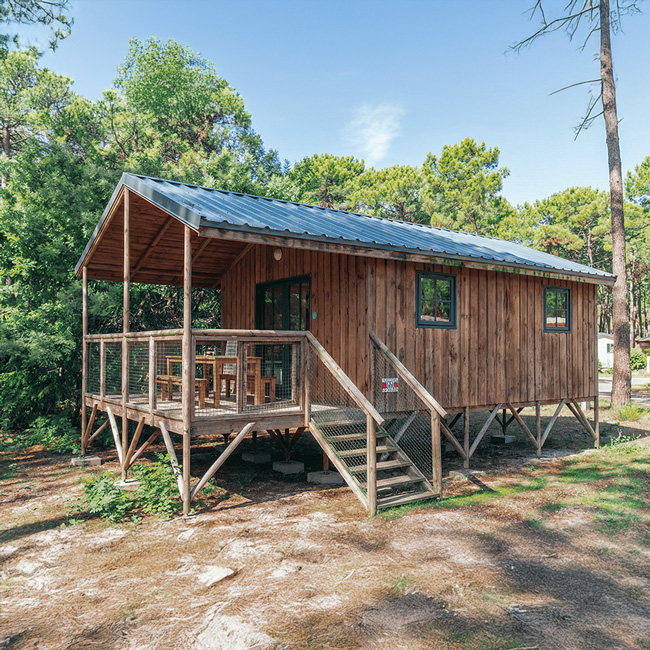
The reclamation of the moorlands of the Médoc peninsula was completed in the early 19th century, with the planting of maritime pines all along the Gironde and Landes coasts. Today, this immense pine forest is the largest in Western Europe, covering almost a million hectares. It’s in the heart of this Landaise forest that your favorite naturist center nestles. The timber trade is still very important in the Médoc. Gemmage, or the harvesting of pine resin, has been practiced in the Pointe du Médoc for decades. Gemmage is the harvesting of pine resin to make turpentine. You can visit an exhibition dedicated to this activity in Vendays. For those who enjoy walking, cycling or mountain biking, there’s an incredible network of trails in our Médoc peninsula, from short family strolls to those for experienced sportsmen and women, there’s sure to be a circuit to suit you.
THE RISE OF THE MEDOC PENINSULA

The Lighthouse Peninsula
In the 19th century, 2 additional lighthouses were built at Pointe de Grave and Le Verdon, to further secure the ever-growing shipping traffic at the entrance to the estuary. The Grave lighthouse in 1860, which is still in operation and today houses the Lighthouses and Beacons Museum. The St Nicolas lighthouse in 1871. It is located on the dune of Plage St Nicolas in Le Verdon sur mer. On the estuary, at Jau, Richard’s Lighthouse, built in 1843. Today, it’s a popular place to visit. Nearby, at the Port de Richard, take to the skies in a hot-air balloon! And if you’d like to see our region from even higher up, visit the Soulac flying club!
Defending the coastline
Coastal protection was the major project of the late 19th and early 20th centuries. During this period, the Médoc constantly fought against dune erosion. Between 1818 and 1946, the Pointe de Grave shifted 720 meters to the east! Between 1920 and 1939, George Mandel, then mayor of Soulac, undertook the construction of protective dykes, thus preventing the commune of Le Verdon from becoming an island once again.
The start of tourism in the Médoc peninsula
It was with the arrival of the railroad in 1875 that tourism began in our Pointe du Médoc. Soulac became a very popular seaside resort for sea bathing.
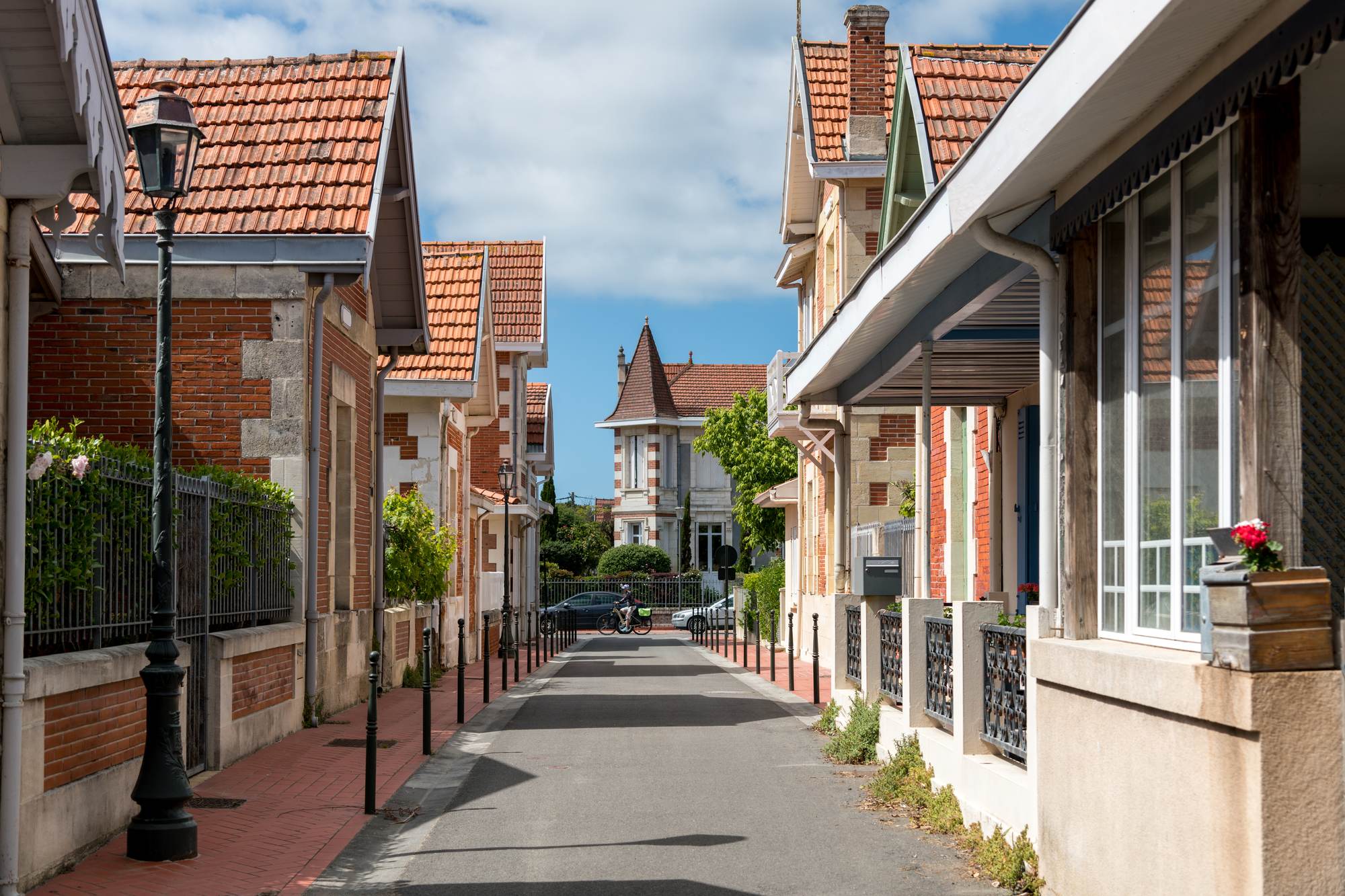
At the same time, a number of beautiful houses with very local and specific architecture were built, 500 villas in all between 1880 and 1940. A market hall was also built, which still houses the village’s daily market. Soulac villas are built from local materials: briquettes made in Soulac and Le Verdon, Charentes limestone and wood. They are adorned with wooden lambrequins, stone cornices, ceramic motifs and other architectural decorations. They all have a name. Soulac has a remarkable architectural heritage, protected by an Aire de Mise en Valeur de l’Architecture et du Patrimoine (AVAP).
It doesn’t take much to go back to the Belle Époque! You can do so every year at Soulac 1900. The event takes place every first weekend in June. Everyone dresses as they did at the beginning of the 20th century! There’s a market, concerts and, from time to time, a steam train pulls into the Soulac station!
The Royan-La Pointe de Grave link
The first service to cross the Gironde began in the 19th century, but passage was limited to pedestrians disembarking from steamers, along the Pointe de Grave jetty. In 1927, a real public service was introduced, with the construction of a pontoon inside Port Bloc. This pontoon is still in service today.
In 1935, the first ferry, “Le Cordouan”, which could carry all types of vehicles, remained in service until 1960. Unlike its successors, this one allowed passengers to travel on the forecastle! As summer traffic grew considerably over the years, 3 new ships were commissioned. The “Côte d’Argent”, the “Gironde” and then the “Médocain” would “run” simultaneously during the summer for years to come. Today, two new amphidromes have taken over: more powerful, bigger and faster: “La Gironde” and “L’Estuaire”.
The Blockhaus
The last major change to the landscape of the Pointe du Médoc took place during the German occupation from 1940 to 1945. With the construction of the “Atlantic Wall”, dozens of bunkers, known here as “Blockhaus”, can still be seen all along the Côte d’Argent.
Despite their questionable origins, today they are an integral part of our beaches and dunes. Mr. Lescorce, in Soulac, a passionate man, will tell you, during his visits, the astonishing history of the Poche de Royan. From Pointe de Grave to Vensac, the Médoc pocket was not liberated until April 20, 1945, just a few days before the armistice was signed.
At Pointe de Grave, just past the ferry pier and before the jetty, you’ll find memorials to WW2 heroes such as George Mandel, and a memorial to Operation Frankton.
Wine tourism
Wine tourism plays an important role in the Médoc. The classification of Médoc and Bordeaux wines dates back to Napoleon III. Just take the Route des Châteaux, from Lesparre to Bordeaux, and you’ll see them all!
Sumptuous bourgeois residences dating from the 17th and 18th centuries and a host of wonderful, exceptional tastings await you! Please note: for the grands crus, please make an appointment to visit the cellars.
There are also a multitude of small wineries on our peninsula. Admittedly, they don’t have the reputation of the former, but after all, to each his own! Perhaps you’ll find the Médoc wine you’re looking for without spending a fortune!
