








Médoc wines are a source of pride for the Médoc people. They play an important role in our region’s history. Wine has been produced in the Graves region around Bordeaux since Roman times. It was transported by sea in amphorae. The Gauls greatly improved wine storage, bringing us the barrel.
MEDOC WINES: A HISTORICAL HERITAGE, BUT NOT ONLY …

Wine story
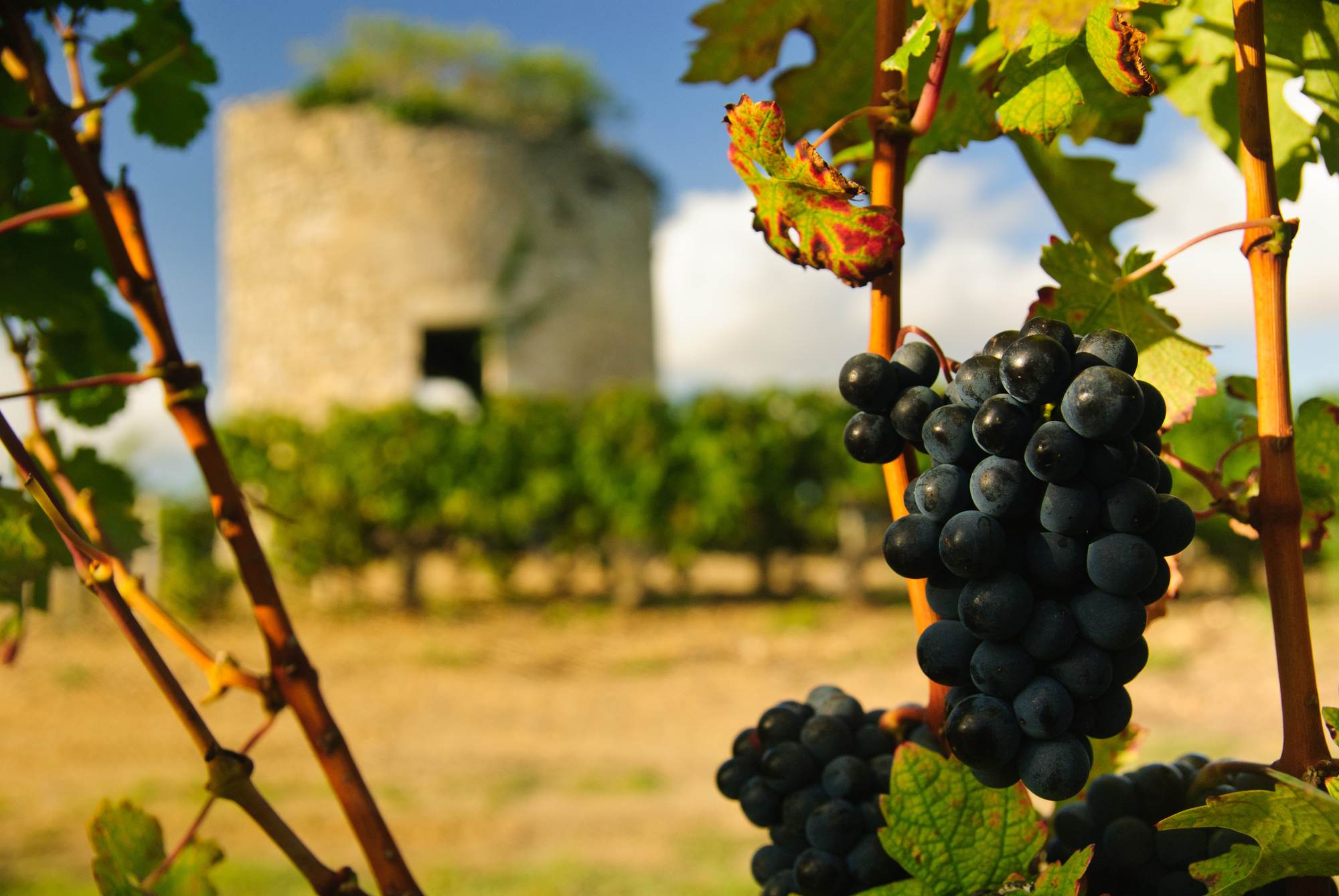
Médoc wines are a source of pride for the Médoc people. They play an important role in our region’s history. Wine has been produced in the Graves region around Bordeaux since Roman times. It was transported by sea in amphorae. The Gauls greatly improved wine storage, bringing us the barrel.
With the drying up of the estuary coast and its “Mattes”, part of the Médoc’s land became arable. Bordelais wine producers found the same quality of soil here as in the Graves. They were quick to plant vines. Médoc viticulture was born. The wealthy British wine producers of Bordeaux financed the rest of the reclamation work. That’s why so many Médoc Châteaux bear names with a British accent: Talbot, Lynch-Bages, Palmer… It’s also British measures that still regulate barrel and bottle sizes and quantities per case.
The development of Médoc wines
Around 6 centuries ago, the Médoc people created a grape variety with exceptional qualities: Cabernet Sauvignon. The Médoc people planted this grape variety, sporadically at first. But after phylloxera wiped out almost all European vineyards, Cabernet Sauvignon, coupled with Merlot, became the benchmark in our region. The rest of France, and then the whole world, followed our example.
Rankings
Napoleon III, on the occasion of the 1855 International Exhibition, decided to classify the wines of the Médoc, Barsac and Sauternes and a single château in Graves, Château Haut Brion. The Grands Crus were born.
It consists of 5 categories: from the 1st to the 5th grands crus. 60 of the 87 Médoc crus are included in this classification! This will literally help these “Châteaux” to market their wines. It remains in force today, but is criticized for being too immutable: for example, Cheval Blanc and Petrus are still not included… There are now 2 new classifications: the St Émilion classification and the Pessac-Léognan classification. A final classification was created in the 20th century: the Crus Bourgeois. The latter is far from set in stone, as it is only valid for 5 years.
The A.O.C.
The Médoc is subdivided into several Appellations d’Origine Contrôlée from north to south:
Margaux;
Saint-Estèphe.
Pauillac ;
Saint-Julien ;
Listrac ;
Moulis ;
THE MEDOC WINES, A MECCA FOR TOURISM AND CULTURE

Is it really necessary to recall the great names of Médoc wines? You’ve probably already heard of Mouton Rothschild or Château Margaux. All the grands crus are world-famous, and not just among wine lovers.
But a visit to one of these châteaux cannot be confined to the winery. The properties are often true châteaux or magnificent bourgeois residences, all built between the Middle Ages and the 18th century. The oldest, Château Lamarque, dates from the 11th c. These “Châteaux” rival each other in grandeur and beauty. In fact, the Châteaux Route, which runs from Lesparre via Pauillac to Bordeaux, allows you to see or catch a glimpse of many of them. The Maison du tourisme et du vin de Pauillac even offers an “Architecture des Châteaux” tour.
Every year, during the “Printemps des Châteaux”, all the Médoc’s wine producers open their doors to the public. From cooperative wineries to grands crus.
Wine and Music
At the beginning of July, Les estivales de Musique en Médoc, a festival of classical and operatic music, takes place in several of these châteaux: it’s the only European festival to feature young winners of international competitions. If you attend one of these concerts, you’ll also have the opportunity to sample the wines produced by the host château.
From September to June, the Musiques au cœur du Médoc association organizes concerts in some of the Médoc’s most prestigious venues.
In August, the “Music & Cook & Wine” evening takes place at the Maison du Vin de Pauillac, along the Estuary, with a free jazz concert, wine producers and a market of local produce.
Wine and Cinema
In July, the town of Pauillac organizes its film festival: Les Vendanges du 7ème Art. The Ph. De Rothschild Foundation offers open-air screenings.
Wine and Literature
The “Lire dans le Vignoble” book fair in St Estèphe takes place every October. It’s a meeting place for regional and national authors, visual artists, photographers and culinary artists.
Wine and Entertainment
Throughout the year, the CDC Médoc Cœur de Presqu’île organizes shows, often free or at low cost, including theater, street performances, dance, concerts and cabaret.
Wine and Museums
- Château Lanessan in Cussac is home to the Musée du Cheval, a horse museum with stables dating back to the 19th century, where the comfort of the animals is astonishing. You can also see superb horse-drawn carriages and other carriage-related equipment. A must-see for horse enthusiasts. Don’t miss a visit to the 8-hectare park and English garden, with its greenhouse dating from the same period.
- Château Maucaillou, in addition to producing a delicious Moulis, features a Museum of Vine and Wine Arts and Crafts.
- Musée du vin dans l’art du château Mouton Rothschild: this museum displays porcelain, paintings, ceramics, glassware, sculptures and more. Three millennia of wine-related objects.
Wine and Marathon
Every first weekend in September, the Médoc Châteaux Marathon takes place. A real marathon! But it claims to be the slowest and most festive in the world. And with good reason! It passes through the finest wine estates in Pauillac, Saint Julien and St Estèphe: 57 in all! The 9,000 participants run their race in disguise (the theme changes every year), stopping off at the stands (around 20 in all) at the estates crossed by the route. No fewer than 30 groups or bandas line the route, cheering on the marathoners. As you’d expect, it’s a motley crew of sports enthusiasts and merrymakers who enjoy a good-natured run in an exceptional setting. The best finish in 2 hours 20 minutes, the slowest in 6 hours 30 minutes.
Wine, Biodynamics and Ecology in the Médoc
At a time when it’s important to preserve our beautiful planet, more and more Médoc vineyards are going organic or biodynamic. It’s easy to find biodynamic or simply organic wines in our region. Numerous estates are now producing them, some of great renown, such as Pontet-Canet and Château Latour. We recommend a visit to Château Hourtin-Ducasse in Pauillac, as the (large) Marengo family is so dedicated, passionate and involved in the biodynamic process of their production, but also in ecology. You’ll be warmly welcomed and informed during your visit, followed by a tasting of their production accompanied by local produce.
For more wine discoveries, if you’re visiting Bordeaux, a visit to the Cité du Vin is a must.
