








Laurent Dugué is a professional beekeeper and breeder of queen bees. He sells queen cells. Laurent chose Euronat and the surrounding region to set up his business. The micro-climate of the northern Médoc, with its vast expanses of vegetation and peacefulness, makes the Pointe du Médoc the ideal place to raise queen bees. Laurent lives in Euronat, and his farm is located in the surrounding forest, without buildings, in the heart of nature.
Installation around Euronat
People often talk about the gradual disappearance of bees due to pollution. But Laurent Dugué came to Euronat some fifteen years ago, trained as a beekeeper and queen bee breeder, with plans to launch his own production of hive queens.
The beginnings
He started out with the help of his mother. He set up his hives in the forests around Euronat. His production is based on his know-how in selecting bee breeds, but also on the floral diversity that provides the bees with pollen and nectar.
Over the years, as his production has grown, Laurent has recruited and trained two people. Yvonick and Tili arrived 7 and 4 years ago respectively. Thanks to their growing expertise, he has been able to transform his production considerably.

His job
In beekeeping, Laurent is what we call a breeder. His job is to select the best hives by evaluating :
- the sweetness of bees,
- their sense of savings or
- their ability to collect honey and stay in the hive.
- their resistance to disease.
By directing fertilizations between virgin queens and male bees (drones), he is able to fix interesting traits and positively develop the genetic potential of his queens.

The different stages
From his best breeding stock, he will first multiply them in an operation known as grafting.
The grafts are placed in hives without queens, known as orphans.
The bees will raise up to 60 queens at the same time in the hive.
6 days later, the queen cells are harvested and incubated for a further 5 days at 35°C.
Laurent’s production
Today, he produces :
- 7 to 8,000 fertilized queens,
- Approximately 24,000 queen cells,
- 150 swarms to better study his own work.
The creation of queens, and subsequently of royal cells, requires a large number of interventions over a period of one month.
A queen bee breeder must also look after his male bees, which are located 7 km from the hives, in order to perpetuate queen bee fertilization.
Laurent sells his queen cells to beekeepers, or uses them in small hives called “fertilization hives” for the production of fertilized queens. He also sells these fertilized queens to beekeepers throughout France.
A job to save the species
At a time when bees are in difficulty in an increasingly aggressive environment, Laurent is helping to save them. He also enables other beekeepers to continue their work. The natural environment of the Euronat region is very favorable, enabling Laurent to perpetuate his activity as well as that of many other beekeepers.
Laurent and his team’s mastery of queen breeding is of the highest quality. As a result, he is highly regarded in the profession.
His 15 years of experience, and his constant questioning, have enabled Laurent to develop innovative and effective practices.
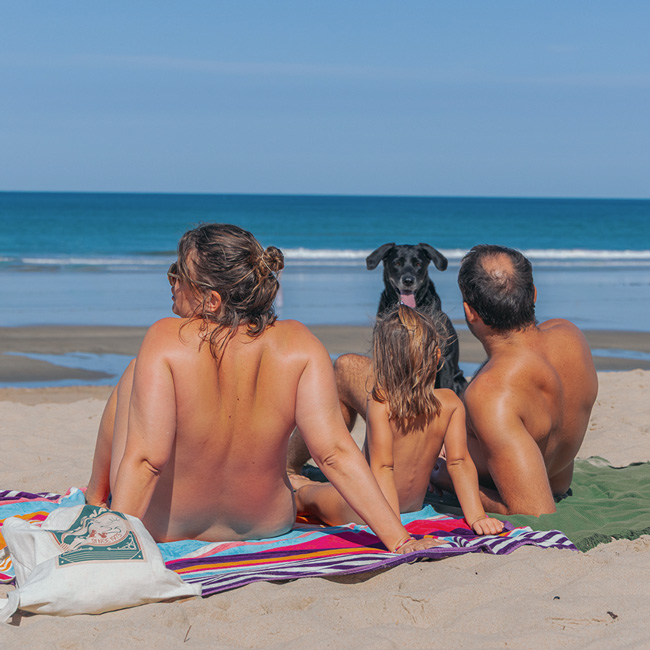
Laurent habite à Euronat toute l’année, naturiste convaincu, il a su allier la passion de son métier avec son lieu de vie

